Research Program
Cell-type-resolved extracellular vesicles and multi-omics for blood-based measurement of neurodegeneration.
Cell-type-resolved extracellular vesicle signals can make neurodegeneration measurable, interpretable, and eventually actionable.
Can molecular cargo from defined CNS-cell-derived extracellular vesicles provide a reproducible blood-based view of disease progression—and identify mechanisms that can be tested experimentally?
The program focuses first on multiple sclerosis and amyotrophic lateral sclerosis, with a broader CNS biology agenda that can extend across neuroinflammatory and neurodegenerative disease.
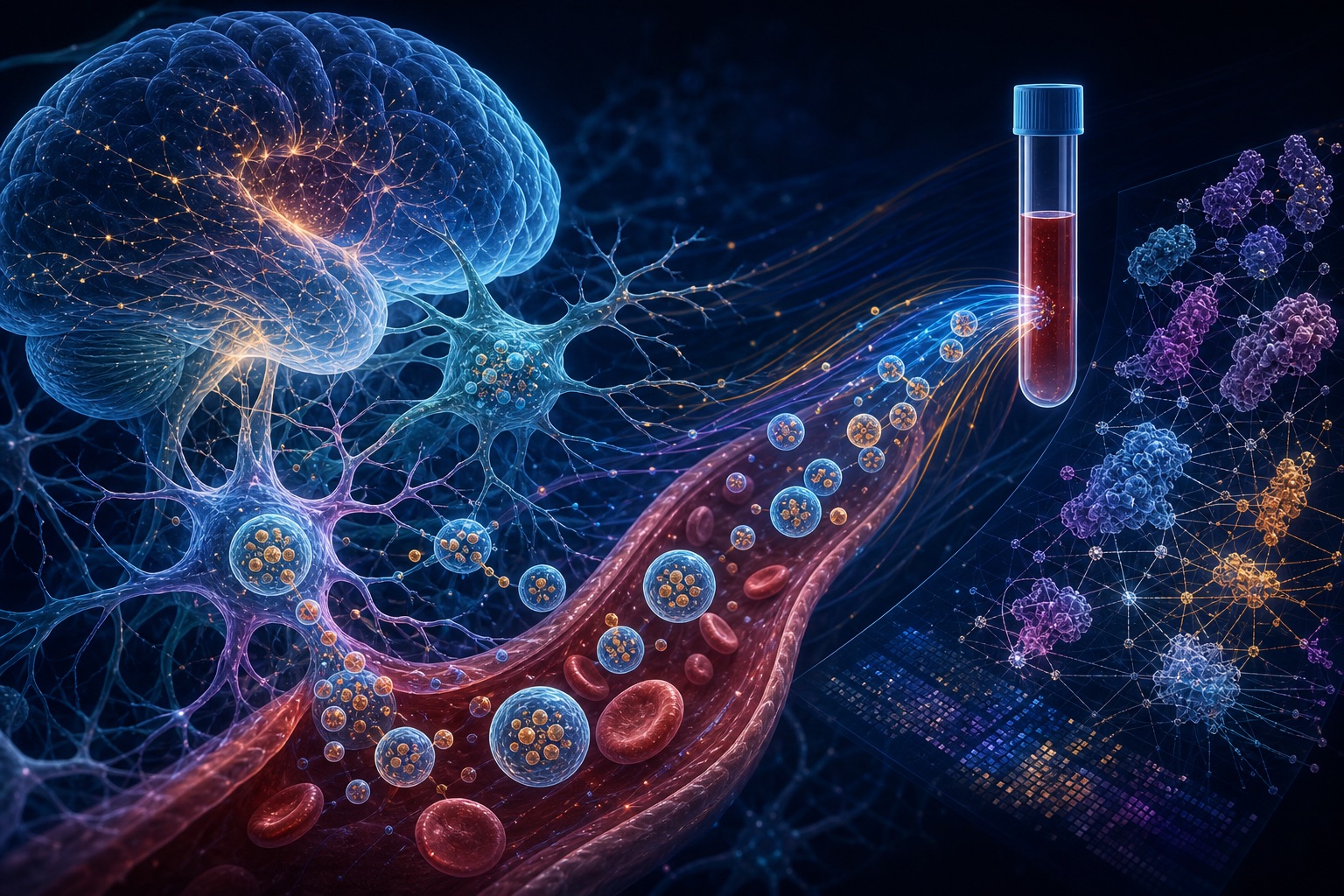
Measure · Map · Functionally Validate
The 3M framework is a sequence: establish that an EV signal is measurable, connect it to biology and patient trajectory, then test candidate mechanisms under controlled conditions.
Measure
Recover cell-type-enriched CNS EV signals from the crowded street of plasma.
Cell-type-enriched EV capture, analytical rigor, and signal protection.
Explore MeasureMap
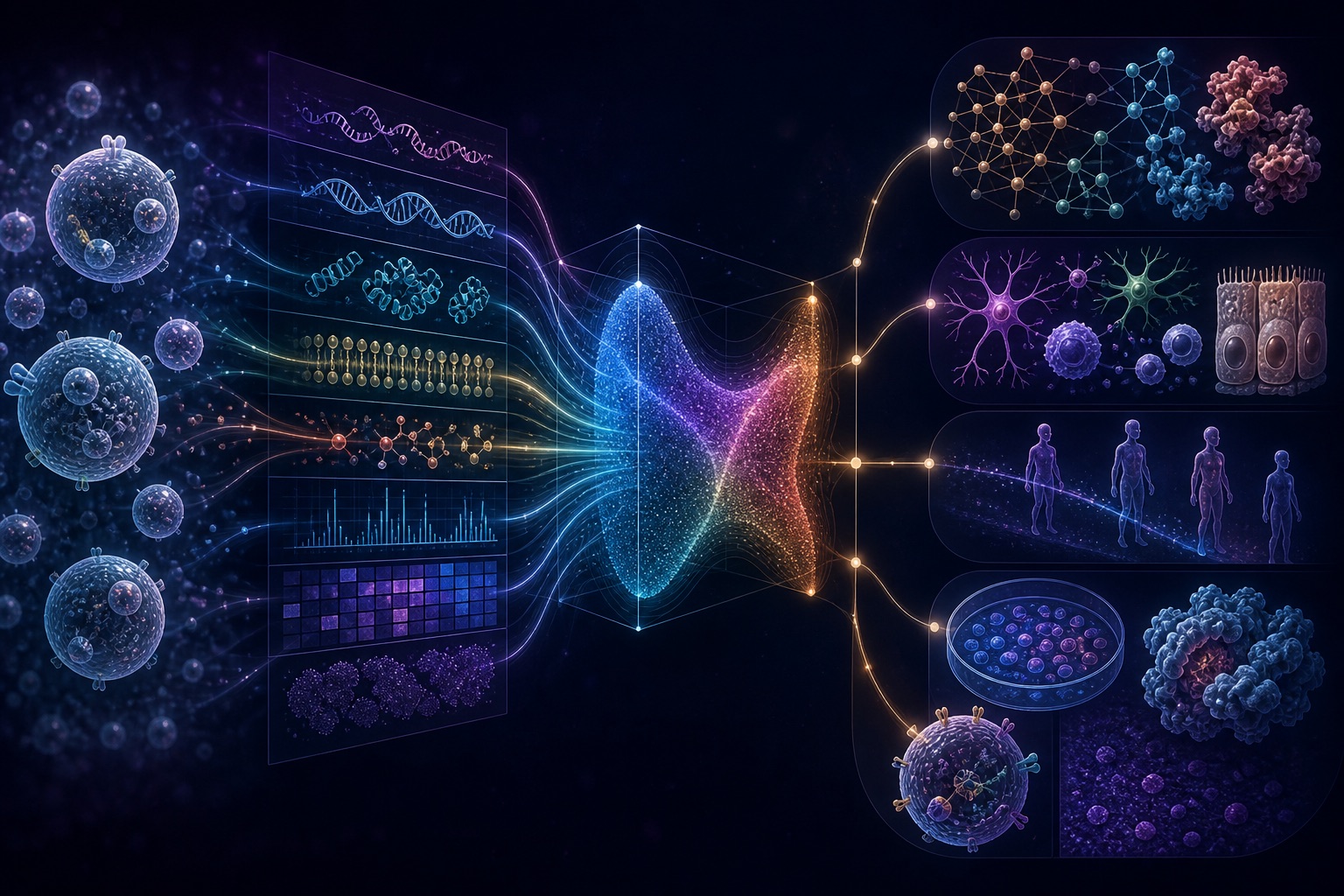
Turn multi-omic EV observations into tissue-anchored, testable biological programs.
Interpretable multi-omics, biological calibration, and evidence-backed hypothesis generation.
Explore MapManipulate
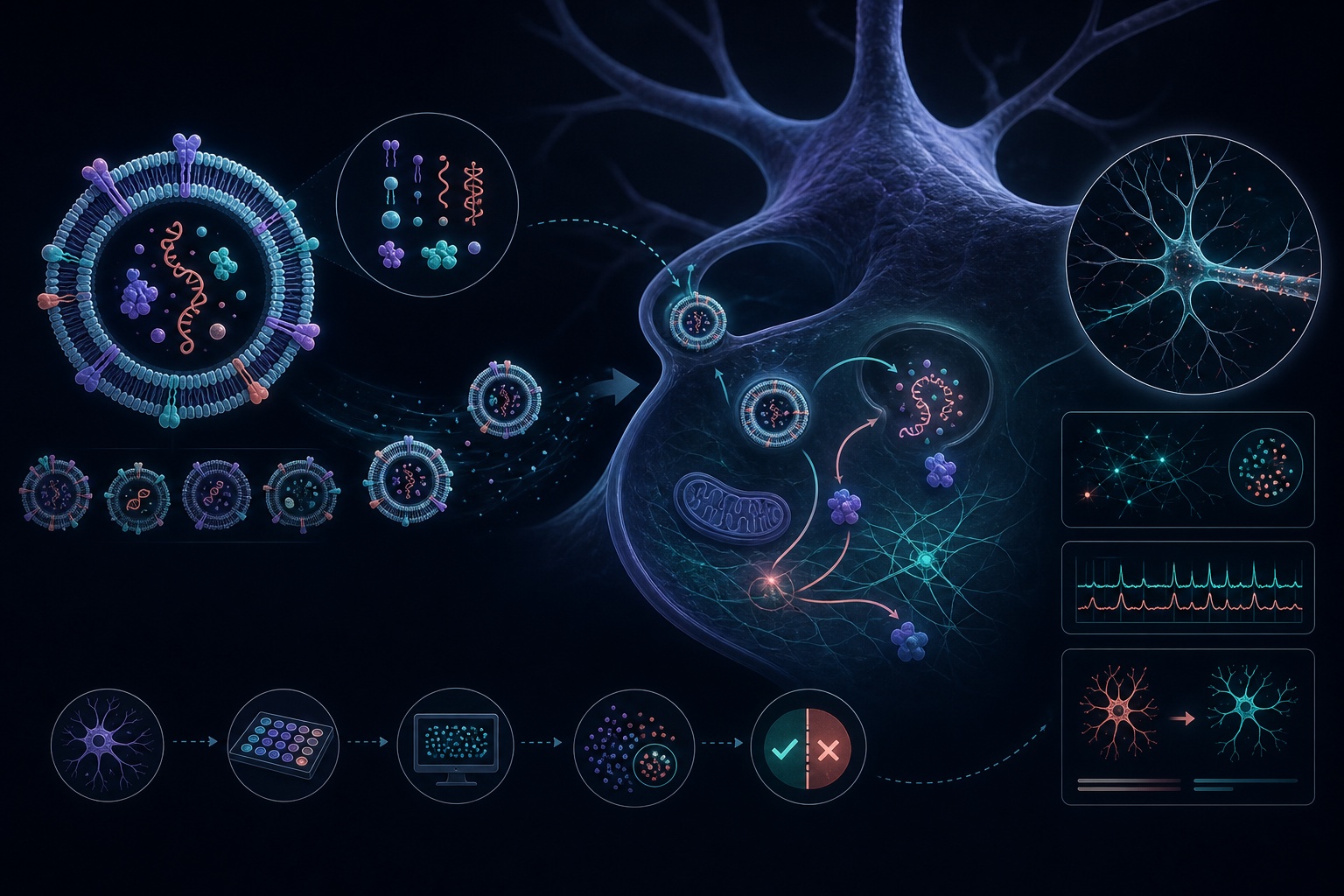
Use functional delivery and perturbation gates to distinguish association from mechanism.
Causal testing, cytosolic-delivery evidence, and engineered EV-mimics.
Explore Manipulate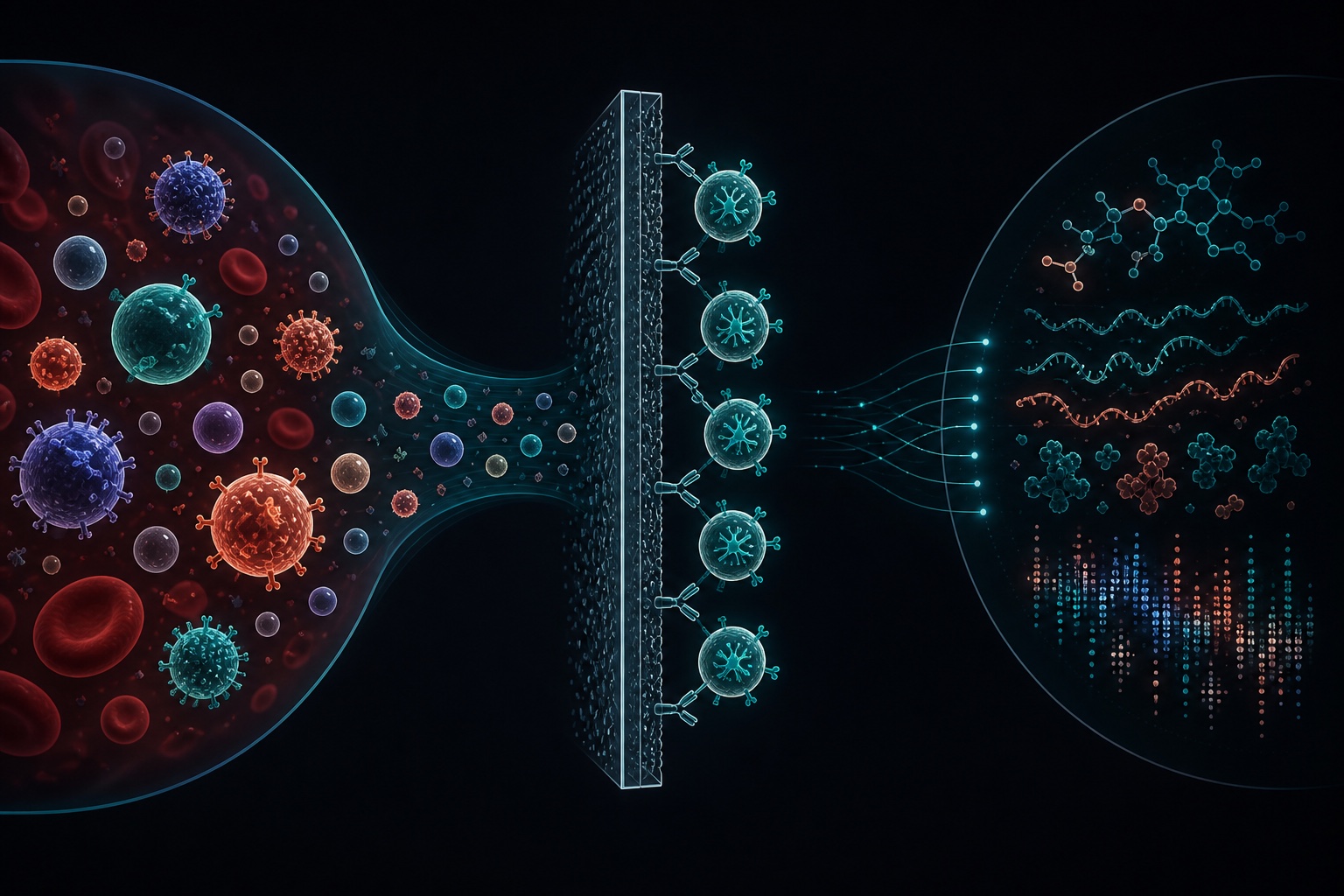

From sensing systems to a CNS biomarker program
The program separates established platform work from current disease-focused studies and future independent directions. The common thread is measurement: make a complex biological signal cleaner, connect it to context, and create a controlled experiment that can challenge the interpretation.
Built cleaner ways to recover vesicle signals
I developed a photosensitive lipid-nanoprobe platform for rapid, size-selective enrichment of synthetic and extracellular vesicles. That work links materials design to the first translational question: can the biological fraction be recovered cleanly enough to interpret?
Advanced Functional Materials, 2024 · patent familyMoved EV analysis toward cell-type-resolved disease biology
At Yale, my current work studies astrocyte-enriched plasma small EV miRNA and mRNA programs in multiple sclerosis and related neuroimmune and neurodegenerative settings, including ALS, long COVID, NMOSD, remyelination, and aging.
Research-stage prognostic and monitoring candidates; not a validated diagnostic testConnected molecular signals to controlled experiments
Earlier platform work established a native plasma-membrane-on-a-chip system and quantitative secretory-vesicle assays. These systems supply the experimental discipline behind Manipulate: distinguish association from uptake, delivery, pathway engagement, and functional response.
Small, 2022 · Cell Calcium, 2023Built a route from evidence to useful decisions
EVd3x makes multi-omic evidence traceable across pathways, diseases, cell contexts, interactions, and validation hypotheses. Through East Rock Diagnostics, I am translating this measurement logic into Astroscope™, a research-use platform for astrocyte-derived EV analysis.
EVd3x platform · East Rock Diagnostics co-founder and scientific leadEVd3x is the computational infrastructure for the Map pillar.
EVd3x begins with source-attributed evidence review and grows into a structured learning environment for EV biology. It keeps molecular evidence inspectable while the longer-term program trains interpretable models on curated evidence and longitudinal EV multi-omic cohorts.
This creates a practical route from a candidate cargo list to a reviewable biological hypothesis, then to cohort-aware models for progression, stratification, and rigorously defined diagnostic use cases.
Curate claim–evidence units
Build expert-reviewed records that specify the strongest supported EV claim, its source publication, preparation and characterization context, assay, biological setting, and missing prerequisites. Contradictory and context-mismatched records become essential training examples rather than noise to hide.
Train EV-specific evidence models
Use the curated graph to train models that classify supported claim boundaries, identify independent versus repeated evidence, surface missing verification steps, and explain why a candidate should advance, remain uncertain, or be rejected.
Link models to longitudinal multi-omic cohorts
Connect analytically controlled EV miRNA, mRNA, protein, lipid, imaging, and clinical data to prespecified outcomes such as progression or treatment response. Cohort-aware model development will prioritize interpretable features, leakage control, and locked external evaluation.
Validate a defined clinical use
Only after the target population, specimen, outcome, threshold, and independent performance are established can a model be evaluated for a diagnostic, prognostic, monitoring, or predictive context of use.
What the program is doing now
The vision is grounded in a set of linked projects rather than a single assay or model. Each one answers a different part of the translation problem, and each has an explicit evidence boundary.
Make glial biology visible in blood
The current translational work studies cell-type-enriched EV cargo in secondary progressive multiple sclerosis, ALS, long COVID, NMOSD, remyelination, and aging. The immediate objective is to identify reproducible miRNA and mRNA programs associated with disease state or progression in defined research populations.
Research-stage prognostic and monitoring candidates; diagnostic use requires additional population, threshold, and validation evidence.Build the Astroscope measurement chain
Astroscope connects a small plasma sample to astrocyte-derived exosome enrichment, targeted cargo readouts, quality control, and a locked research-use report. The engineering question is whether the full chain can remain analytically disciplined as it moves toward clinical-trial and biopharma workflows.
RUO development with technical-validation and assay-development support.Use interpretable models to preserve the evidence trail
EVd3x is a source-attributed workspace for interpreting EV multi-omic evidence. It links cargo evidence to pathways, diseases, cell contexts, interactions, and validation hypotheses, creating a reproducible route from an observed molecular feature to a biological explanation and a next experiment.
Live research platform with a roadmap toward EV-specific evidence and cohort models.Test whether cargo can change cell state
Earlier work on membrane-on-a-chip systems, secretory-vesicle assays, lipid nanoprobes, and engineered vesicle mimics supplies the functional vocabulary for the third M. These platforms help separate association, uptake, delivery, pathway engagement, and reproducible response.
Preclinical mechanism and functional-gate development.Biomarker development is a context-of-use problem
A model cannot become a clinical claim by accuracy alone. Each research program specifies its population, specimen, intended use, evidence stage, and the next validation required. This keeps terms such as prognostic, monitoring, and diagnostic precise.
Read the FDA–NIH BEST resourceEast Rock Diagnostics: from assay to use case
As Co-Founder and Scientific Lead, I help translate the research program into a platform that can be evaluated by clinical and biopharma partners. Astroscope™is designed to enrich astrocyte-derived exosomes from a small plasma sample, then quantify targeted protein, miRNA, and lipid cargo as biologically grounded CNS signatures.
The company is developing a research-use platform for evaluating astrocyte-derived EV measurements with clinical and biopharma collaborators. Its role here is translational assay development, not a claim that the platform is a validated clinical diagnostic.
Visit East Rock DiagnosticsEVd3x: computational infrastructure for the Map pillar
EVd3x is a live, source-attributed workspace for moving from cargo lists to pathway, disease, cell-context, interaction, and experimental-validation hypotheses. It is designed to keep evidence visible while making multi-omic exploration more tractable.
Current support and translation
The program is supported by $200,000 in PI research funding and a $200,000 collaborative validation award. It is being developed through mentored support, protected platform work, and research-stage biomarker studies. Public claims on this site are kept at the stage supported by the underlying evidence.
View Funding & Awards- Robert E. Leet and Clara Guthrie Patterson Mentored Research Award$200,000 · Principal Investigator · 2026–2028 · miRNA signatures in astrocyte-enriched small EVs for multiple sclerosis progression research.
- Colton Center for Autoimmunity Award$200,000 · Co-Principal Investigator · 2025–2027 · Technical validation of the Astroscope EV-based biomarker assay.
- Yale Diabetes Research Center Pilot Grant$60,000 · Postdoctoral Lead · 2023–2024 · Secretory-vesicle subgroups in first- and second-phase insulin secretion.
- Foundation Nanoscience Graduate Fellowship€100,000 · Graduate Fellow · 2018–2021 · SPRI-based optoelectronic nose and biohybrid surface development.
- NIH Pathway to Independence Award (K99/R00)Pending · Principal Investigator · Submitted June 10, 2026 · Requested institute: National Institute of Neurological Disorders and Stroke (NINDS) · Biologically Anchored Extracellular Vesicle RNA Modules in ALS Progression.
Build tools people can inspect, reproduce, and use responsibly.
- Rigorous measurement before biological interpretation
- Reproducible computation with traceable evidence
- Experimental grounding for every strong inference
- Translation guided by a defined context of use
- Clear communication across disciplines and communities
- Entrepreneurship in service of useful, accountable tools